How to Prevent Costly Loading Dock Door Failures
How to Prevent Costly Loading Dock Door Failures
Loading docks across Philadelphia move product every hour of the workday. When a dock door or leveler fails, a trailer sits, labor idles, and delivery windows slip. That adds cost and risk in a corridor where the I-95 spine, the Navy Yard in the 19112 zip code, the Port of Philadelphia and Tioga Marine Terminal, and distribution nodes in the Far Northeast around 19154 and along Roosevelt Boulevard demand steady uptime. Preventing failures is not about doing more work. It is about doing the right work at the right time and focusing on the parts that actually drive downtime.
Philadelphia’s climate and urban logistics profile push dock equipment hard. Summer humidity and heat stress motors and controls. Winter freeze-thaw cycles stress steel, seals, and thresholds. Salt and urban grit chew through rollers and bottom bars. The result is a pattern of repeat failures on sectional doors, rolling steel service doors, high-speed roll-up doors, and dock levelers that can be anticipated and reduced with a disciplined service plan grounded in local conditions.
Why dock reliability in Philadelphia is different from other markets
Philadelphia sits in a mixed-humid climate that swings from 90F+ summer heat to winter cold that dips below 20F multiple times each season. The city also sees a high number of freeze-thaw events each winter, which flexes steel, loosens anchors, and degrades weather seals. Those swings matter at the loading dock because they change how steel doors track, how torsion springs balance, and how hydraulic seals hold fluid.
Urban exposure adds another layer. Road salt tracked in from South Philadelphia and Center City routes, plus airborne grit along I-95 and Aramingo Avenue, collects at the bottom bar of a door. That grit acts like grinding compound on rollers and track. It also accelerates rust on coil springs, which are the helical steel springs mounted above a sectional overhead door that carry the door weight so the operator does not do all the work. For rolling steel service doors, salt and grime pack into the curtain’s interlocked slats and into windlocks, which are small clips that keep the curtain seated in the side guides under wind load. This accelerates binding and motor strain.
https://commercial-doors.s3.us.cloud-object-storage.appdomain.cloud/top-security-gate-installation-in-philadelphia-county-2026.htmlThe logistics footprint in the Delaware Valley compounds the cycle count. Facilities near the Navy Yard, the airport in 19153, the 19134 Kensington and Port Richmond belt, Bensalem and Levittown in Bucks County, and Cherry Hill and Mount Laurel in South Jersey push doors and levelers through dozens or even hundreds of cycles per day. High cycle counts bring predictable fatigue. The parts that fail most in Philadelphia docks are torsion springs, bottom roller assemblies, operator chains and sprockets, photo eyes and safety edges, dock leveler hydraulic cylinders, dock lip pins and bushings, and compressed dock seals and bumpers.
Common failure modes on sectional, rolling steel, and high-speed doors
A sectional overhead door is a door made of hinged panels that roll up on tracks. It is counterbalanced by torsion springs mounted on a shaft above the door opening. In Philadelphia distribution buildings from the 1970s through early 2000s, most dock openings use sectional doors paired with mechanical or hydraulic levelers. The highest-frequency failures on sectional doors include spring breakage, cable fraying, roller stem pull-out, track misalignment after a trailer impact, operator clutch slip, and limit switch drift. A limit switch is the electrical device that tells an operator when to stop at the open and closed positions. When the limit drifts, a door travels too far and jams, or it stops short and leaves a gap.
Rolling steel service doors use an interlocking slat curtain that coils above the opening on a barrel. They thrive in tight headroom spaces common in Center City retrofit docks and older buildings along Delaware Avenue. Their failure pattern centers on slat damage from forklift impacts, broken end locks that keep the curtain in the guides, worn guide wear strips, motor brake failure that causes door drift, and control station failures in damp dock environments. Brakes stick more often in winter cold snaps when grease thickens, so annual cold-weather function checks are smart in the Philadelphia market.
High-speed roll-up doors, seen in food distribution and temperature-controlled zones in South Jersey and at facilities around University City research campuses, rely on light curtain sensors and encoder-based limits. A light curtain is a grid of infrared beams that detect people or objects under the door. An encoder is a sensor that tracks door travel to control stopping points. Their weak points in this region are belt wear, sensor contamination from condensation and dust, and motor failures after repeated hits to emergency opening speeds during peak humidity. Summer humidity in Philadelphia is not kind to electronics and safety sensors unless cleaning is scheduled.
Dock levelers, seals, and bumpers: the hidden drivers of downtime
A dock leveler is the steel platform that bridges the gap between the warehouse floor and the trailer bed. It can be mechanical, hydraulic, or air-powered. Mechanical units use springs and pull chains. Hydraulic units use cylinders and a small power pack with fluid. Air-powered units use a durable bag inflated by a blower. In Philadelphia, hydraulic levelers are common in modern distribution hubs because operators prefer push-button control. Their failure signature here is hydraulic oil leaks at cylinder seals, power unit motor burnout from dirty electrical supply, and lip hinge pin wear. The lip is the hinged extension that lays on the trailer. When that hinge binds, drivers fight the lip and downtime starts.
Dock seals and shelters are the foam or fabric structures around the door opening that seal a trailer. Seals are compressible foam pads. Shelters are fabric structures with side curtains that trailers back into. In a city that uses heavy road salt and sees sharp temperature swings, seals and shelters crack and tear faster than in mild markets. Once torn, water penetrates and freezes, which splits foam. Frayed curtains flap into a door path and catch on a bottom bar. Old, compressed seals make doors look misaligned because they no longer load the trailer squarely. Dock bumpers, which are thick rubber blocks at the dock face, also compress and tear. If bumpers compress, trailers hit the building harder and knock tracks out of plumb. That single offset can ripple into roller pin shear, cable off drums, and motor overload trips.
Philadelphia climate effects that accelerate failure
Summer conditions in Philadelphia reach sustained stretches above 90F with high humidity. That heat thins hydraulic oil in levelers and increases current draw on motors. Electrical cabinets and operator housings take in moist air that condenses overnight, which leads to corroded contacts. Winter brings frequent freeze-thaw cycles. Steel expands and contracts. Anchors work loose in concrete. Thresholds pop. Weatherstrip and brush seals stiffen and tear. Doors with poor balance in winter run heavier, which strains operators and trips overload protections. The city also uses road salt across Center City, Old City in the 19106 zip code, and out to Manayunk and Roxborough. Salt collects at the bottom of the opening and accelerates corrosion on bottom fixtures and door tracks. Without seasonal service, those conditions produce predictable failures.
Early warning signs a dock door or leveler is headed for trouble
Facilities can spot the most common precursors of a shut-down if they watch the right cues. Training a dock lead to call for service when any one of these shows up reduces emergency calls and expensive overnight work orders.
- Door balance changes, like a sectional door stopping mid-travel or drifting down when released, which points to spring fatigue or cable stretch.
- Operator straining sounds, slower travel, or a hot motor casing, which indicate increased load from poor balance or jammed guides.
- Visible frayed lifting cables or cracked rollers, which are immediate safety risks that can cascade into a door drop or cable off drums.
- Hydraulic leveler lip hesitation, spongy return, or oil spotting on the pit floor, which usually comes from cylinder or hose leaks.
- Dock seals torn through or dock bumpers crushed thin, which change trailer contact points and knock doors and tracks out of alignment.
Maintenance cadence that fits Philadelphia docks
Cycle count, product sensitivity, and shift patterns should set service frequency. Still, Philadelphia climate argues for two anchor windows. Spring service prepares doors and levelers for heat and humidity. Fall service tightens hardware and corrects balance before winter. Many high-cycle docks benefit from quarterly checks. The most productive visit length is the one that inspects, tests, and adjusts with a short punch list for corrective repair, not a blanket rebuild. The following plan maps to typical local operations.
- Spring service in April or May to adjust door balance, clean and lube rollers and hinges, test operator limits, clean safety sensors, and change or top off leveler hydraulic fluid if needed.
- Fall service in September or October to tighten anchor bolts, check cables and drums, confirm weather seals, test motor overloads, and verify leveler lip pins, bushings, and hinge condition.
- Quarterly safety checks for high-speed doors and food or pharma docks where uptime and cleanliness are critical, including light curtain cleaning and encoder verification.
- Monthly in-house visual sweep by a dock lead to flag oil leaks, torn seals, cable condition, and bumper compression for a contractor to address.
- After-impact checks any time a trailer hits a door, track, or leveler, because hidden damage often appears a week later as a misaligned track or a cable off drum.
Safety and standards at the dock
Safety starts with devices that must work every cycle. Photo eyes, which are the sensors mounted near the floor that stop a door if the beam is broken, need clear lenses and proper alignment. Electric safety edges, which are pressure-sensitive strips along a door bottom bar, need continuity and proper compression to reverse a closing door. Vehicle restraint interlocks, which tie a dock lock to a door operator to prevent door opening unless a trailer is secured, must actually lock to a trailer’s Rear Impact Guard. Interlocks reduce early pullout risk and should be tested during each professional service visit.
OSHA safety practices apply at docks. Lockout and tagout procedures must be followed during service. Guards and covers on chain drives and sprockets must be in place. Emergency egress must remain clear next to dock doors, which brings NFPA 101 Life Safety Code and IBC Chapter 10 into view for adjacent man doors. Where offices or customer service areas connect to the dock through automatic swinging or sliding doors, AAADM standards and ANSI A156.10 and A156.19 apply to those automatic systems, and AAADM-certified technicians should handle that work. ADA door force guidelines apply to low-energy operators in office corridors connected to docks, which cap interior door opening force at around 5 lbf in typical configurations.
Technical details that matter in repair decisions
Balance on sectional doors is everything. A torsion spring carries door weight through winded torque on a steel shaft. The correct wire size, diameter, and length set spring strength. Springs lose torque as they fatigue, which shows up as a door that will not stay at mid-travel or pulls the operator harder on one side. Replacing springs as matched sets keeps a pair balanced and reduces cable fray. A lifting cable is the steel cable that winds on a drum to lift the door. When a spring breaks, do not cycle the operator to test. That is how drums crack and shafts warp.
For rolling steel service doors, end locks and windlocks require the right part profile for the guide type in the opening. Swapping in a near-match may make a curtain run for a week, but it will pull out of the guide on the first wind event along the Delaware River. Curtain slat thickness also matters. Slats dent faster in high-traffic docks if a light-gauge slat is used where a heavier slat is called for. That is a spec decision to flag during a repair estimate, not after another forklift hit.
High-speed doors use encoder-based travel limits. Encoders track position on the shaft and tell the controller where the door is. If the encoder slips on the shaft or gets contaminated, the door stops short, throws a fault, or slams the header. Cleaning and re-indexing prevent that failure pattern. Safety light curtains should be cleaned each service visit and tested to full coverage. A narrow blind spot from a dirty lower lens can trigger a serious incident.
Dock levelers should raise and lower without chatter and the lip should extend smartly. A lazy lip points to low hydraulic fluid or a worn cylinder. Air-powered levelers rely on a durable bag. Air leaks, even pinholes, slow travel and drive operators to override controls. Lip hinge pins and bushings wear into oval shapes under heavy cycle counts. That makes the lip rattle and creates a step that catches pallet jacks. Replacing pins and bushings before the hinge angle deforms is far cheaper than rebuilding a lip hinge weldment after another season of pounding.
Parts and brands commonly seen across the Delaware Valley
Many Philadelphia and South Jersey facilities run a mix of Hormann and LiftMaster commercial operators on sectional doors, Cornell and Cookson rolling steel service doors in tight headroom Center City docks, and Rytec or Albany high-speed roll-up doors in cold storage and clean zones. These brands support OEM parts availability, which matters because using the correct safety device, guide wear strip, or encoder keeps the door in its original safety listing. On the storefront and office side of a warehouse, it is common to see aluminum systems from Kawneer, Tubelite, YKK AP, Vistawall, and US Aluminum with LCN or Norton door closers. Even if the dock is the main focus, connecting paths must also close and latch properly to keep conditioned air in and egress compliant.
Weatherstripping and brush seals deserve more attention than they get. A brush seal is the row of nylon or similar bristles mounted along a door edge to close gaps. In Philadelphia, brush seals on sectional doors degrade faster on south and west elevations under summer UV and in winter from ice buildup. Worn seals invite wind and water. That water freezes on tracks and binds rollers. Replacing seals is a small task that prevents larger ones. The same goes for an aluminum threshold at a man door near the dock. Thresholds can heave and corrode under freeze-thaw cycles. Keeping them tight and sealed keeps grit from migrating into adjacent door tracks.
Why emergency calls cost more than planned work
Every property manager and warehouse lead in Philadelphia knows the math. An after-hours emergency call to free a jammed dock door or lift a leveler that will not rise costs more than a planned visit. General-market pricing often shows a meaningful delta between daytime scheduled work and emergency rates, plus material run charges when a truck has to leave for parts in the middle of the night. The bigger cost, however, is the lost shift time while a bay is down. For high-volume facilities near 19154 or along the Blue Route, one stuck door can back trucks onto the lot and trigger detention fees. Planned quarterly checks and small part replacements, like swapping a frayed cable or a weak photo eye before failure, are inexpensive compared to a stuck trailer and a crew waiting.
Philadelphia site types and dock behavior patterns
Distribution centers along I-95 and the Turnpike run heavy cycle counts and see more operator and spring wear. Older urban docks near 19102 and 19103 in Center City squeeze doors into low headroom spaces where rolling steel service doors are common, which shifts service focus to slats, end locks, brakes, and guide wear. Food and pharma sites near University City and along the Route 202 corridor run high-speed doors with strict sanitation, which makes sensor cleaning and belt checks part of every visit. Manufacturing sites in the river wards around 19134 and 19125 operate through winter with dock doors open for ventilation, which stresses springs and operators through more duty cycles at lower temperatures.
Seasonal spikes matter too. Retail distribution in Bensalem, Langhorne, and Cherry Hill accelerates ahead of holidays. That push happens in a Philadelphia fall when temperatures swing and daylight hours shrink, which is the worst time to discover a weak torsion spring. Scheduling fall service in September avoids surprises in November and December when finding parts can also take longer due to regional demand.
Small adjustments that prevent big failures
Door balance adjustments reduce operator load and extend motor and gear life. Cleaning track and guide debris off the floor prevents bottom bar binding. Tightening track fasteners keeps rollers inside the track during a trailer bump. Re-indexing operator limits restores safe stopping points before a door runs into a header. Replacing a cracked roller or a single frayed cable cuts off a failure chain that would otherwise end with a door drop or a cable off drums call.
On levelers, changing a weeping hose or cylinder ends the oil-on-pit-floor problem that becomes a slip hazard. Replacing crushed dock bumpers keeps trailers from striking the building. Replacing torn dock seals prevents water ingress that freezes on floors and turns into worker injury risk. These are simple repairs that tend to get deferred. In Philadelphia’s climate, deferral costs more due to the extra weather stress and urban grit.
How adjacent entrances factor into dock performance
Warehouse office entrances near docks often use aluminum storefront doors with hydraulic closers. A hydraulic closer is the device that controls door speed and latching. Philadelphia’s summer heat thins closer fluid and winter cold thickens it, which changes closing speed and can leave a door unlatched. Unlatched doors leak conditioned air and create negative pressure near the dock, which pulls dust and moisture toward dock openings. Servicing those closers and the Adams Rite deadlatches they often use keeps the building pressure more stable. Where automatic sliding or swing doors serve customer counters or interior corridors near the dock, annual safety checks under ANSI A156.10 and A156.19 by AAADM-certified technicians keep those systems safe and reliable. While this work is separate from dock service, the combined effect is better building control and fewer headaches when doors and docks interact.
A realistic view on expected life and replacement decisions
Torsion springs have a finite cycle life. In high-cycle docks, consider extended-life spring sets. They cost more up front but reduce unplanned downtime. Sectional door panels dent under repeated forklift hits. If panel repairs pile up, replacing a door with impact-resistant panels is often cheaper over three to five years than repeated spot fixes. Rolling steel curtains with frequent slat damage near the bottom benefit from reinforced bottom sections. For high-speed doors that trip faults often, an operator and control upgrade can stabilize performance if the structure is sound. Choosing OEM-grade parts matters in Philadelphia’s harsher conditions. OEM parts keep tolerances tight enough to handle the city’s wind, grit, and temperature spread.
Local, shareable insight for Philadelphia property managers
Facilities along Walnut Street, Market Street, and East Passyunk Avenue see storefront doors cycle 500 to 3,000 or more times per day on busy stretches. The dock side faces a different pattern but shares the same physics. Heavy cycle counts near I-95 and the Port of Philadelphia push dock springs, motors, and seals to their limits. Philadelphia also sees roughly 50 to 60 freeze-thaw shifts in a typical winter season, which expands and contracts every anchor and gap in a dock opening. This is why spring and fall dock service deliver the highest return on preventive maintenance here. That seasonal timing hits the two windows that drive the most failures in our region.
Where emergency commercial door repair still makes sense
Not every failure can be scheduled. A snapped torsion spring on a busy morning, a cable off drums with a live trailer in the bay, a rolling steel curtain jammed by a dented slat after a forklift hit, or a hydraulic leveler that will not rise after a line break all call for immediate response. The facilities most ready for these calls keep clear notes on door sizes, operator models, and leveler types by bay. That detail lets a contractor load the right OEM parts before dispatch so the door returns to service on the first visit. In a Philadelphia winter, having a contractor who carries common springs, cables, rollers, photo eyes, encoder belts, leveler hoses, and hydraulic fluid on the truck is the difference between an hour of downtime and a shift lost.
Service coverage that maps to real Philadelphia geography
Dock-heavy properties spread across Philadelphia’s industrial grid from the river wards in 19134 through Port Richmond and Frankford in 19124, across South Philadelphia in 19148 and the Navy Yard in 19112, through University City in 19104, and out to the Far Northeast in 19154. Suburban clusters sit in King of Prussia and Plymouth Meeting in Montgomery County, Bensalem and Levittown in Bucks County, Media and Upper Darby in Delaware County, and West Chester and Exton in Chester County. New Jersey sites in Cherry Hill, Camden, Voorhees, and Mount Laurel and Delaware sites in Wilmington and Newark round out the region. Service plans and response models must be built for that spread, with emergency commercial door repair direct-dispatch technicians and stocked service trucks to reach bays fast.
What drives cost on Philadelphia dock door service
In the general market, simple adjustments and part swaps fall into modest ranges. Replacing a single frayed cable or a handful of rollers usually costs far less than a spring change or an operator replacement. Full torsion spring replacement costs more due to both part cost and the skilled labor and safety controls involved. Rolling steel slat replacement cost depends on gauge and finish, and control or brake work tends to add labor hours when housings are hard to access in old Center City docks. High-speed door belt and sensor work is usually less expensive than motor and controller replacement. Hydraulic leveler hose and cylinder work runs a wide range based on access and fluid cleanup. Exact pricing requires an on-site estimate that confirms door size, parts, headroom, power, and safety device condition. Fast, accurate scoping is how facilities avoid change orders later.
Why Philadelphia businesses choose a dock-focused contractor
Dock and commercial door service is its own discipline. It takes understanding how sectional doors, rolling steel doors, high-speed doors, and dock levelers interact under Philadelphia’s climate and cycle patterns. It also takes a stocked truck inventory with the parts that actually fail here, plus the ability to handle connected storefront and office doors and the periodic need for emergency board-up if a vehicle strikes a glass entrance near a dock corridor. AAADM-certified technicians on the automatic entrance side, knowledge of ANSI and NFPA references where applicable, and familiarity with OEM brands across both dock and storefront equipment complete the picture.
Call for dock door and leveler service across Philadelphia and the Delaware Valley
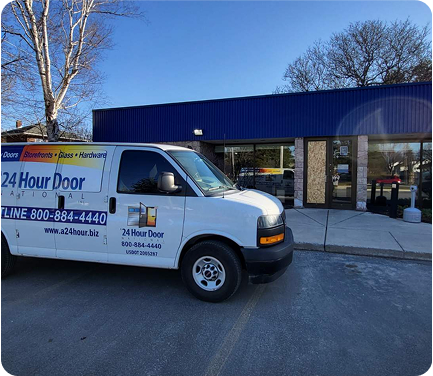
A-24 Hour Door National Inc. Dispatches locally from 6835 Greenway Ave, Philadelphia, PA 19142 with 24/7 emergency coverage for dock doors, rolling steel, sectional doors, high-speed doors, and dock levelers across the city and suburbs. Service trucks are stocked for single-trip repair with OEM parts. AAADM-certified technicians handle automatic entrance work under ANSI A156.10 and A156.19 where offices and customer areas connect to dock corridors. The company brings more than 30 years in the commercial door service market, a satisfaction guarantee on replacement parts, and Pennsylvania contractor license #PA078819.
For immediate dispatch or to schedule a spring or fall dock service visit in Center City, Old City 19106, Northern Liberties 19123, Fishtown 19125, Fairmount 19130, University City 19104, South Philadelphia 19148, the Navy Yard 19112, Bustleton 19115, Somerton 19116, Far Northeast 19154, or the surrounding counties and South Jersey, call A-24 Hour Door National Inc. At (215) 654-9550 or the national line at (800) 884-4440. The team covers commercial door repair, commercial door installation, emergency commercial door repair, dock leveler repair, rolling steel and sectional door work, and automatic sliding door repair for facilities that need both dock and entrance support.