Finding AAADM Certified Automatic Door Repair in Philadelphia
Finding AAADM Certified Automatic Door Repair in Philadelphia
Automatic doors do real work on Philadelphia commercial properties. They carry high foot traffic, support ADA access, and prove their value in every weather swing. When they falter, the building slows down. The difference between a quick recovery and an extended outage often comes down to whether an AAADM-certified technician touches the door first. AAADM is the American Association of Automatic Door Manufacturers. Certification confirms that a technician understands the safety standards, sensor coverage, and performance checks required by ANSI A156.10 for automatic sliding doors and ANSI A156.19 for low-energy automatic swing doors.
Across Center City, University City, the Navy Yard, and health campuses like Penn Medicine and Jefferson Health, automatic sliding and swinging entrances see more cycles and more sensor interruptions than suburban sites. They also ride through summer heat and humidity and winter freeze-thaw that test motors, belts, gearboxes, and control boards. An AAADM-certified approach keeps people safe and keeps entrances moving.
Why AAADM matters in Philadelphia’s automatic door environment
Philadelphia runs hot, cold, and busy. The city sits in a mixed-humid climate with long humid stretches in July and August and a winter that swings above and below freezing many times per season. Summer heat above 90F can stress control boards and degrade lubricants inside operators. Winter cold thickens lubricants, stiffens weather seals, and exposes weak spots in wiring and connectors. That reality shows up fast at automatic doors along Walnut Street, Chestnut Street, South Street, the concourses around City Hall, Rittenhouse, Old City, and the high-cycle medical and university corridors in 19104 University City.
Cycle count is the second stressor. A busy retail or healthcare entrance on Walnut Street, East Passyunk Avenue, or near Penn’s campus can see hundreds to thousands of openings per day. Each cycle loads the operator, the belt or linkage, the clutch, the rollers, and the safety and activation sensors. High cycle counts speed up wear on sliding door belts and hanger rollers and push swing door gearboxes and clutch mechanisms hard. That is why a Philadelphia building with a door that ran fine for years can start to struggle right after a heatwave or a cold snap, or right after a tenant change that increases foot traffic.
Finally, egress compliance and ADA access are in play. Automatic doors must meet the intent of the ADA, which includes a 5 lbf maximum opening force for interior doors where applicable, and they must provide safe operation per ANSI A156.10 and A156.19. AAADM-certified technicians are trained to test, adjust, and document these items so that property managers can show due diligence to the City of Philadelphia Department of Licenses and Inspections if needed.
What AAADM-certified automatic door repair actually covers
Automatic sliding door repair focuses on the operator, which is the motor and gearbox unit that drives the door panel. The operator turns a belt that moves the sliding panel. The system relies on activation sensors and safety sensors. Activation sensors, such as overhead microwave or infrared sensors, tell the door to open when a person approaches. Safety sensors, such as presence sensors that create a detection field near the moving panel, stop or slow the door if someone is in the path. On many systems, a pressure-sensitive safety edge or secondary safety beam adds backup protection. An AAADM-certified technician verifies that all these elements work together and meet ANSI A156.10 coverage and timing requirements.
Automatic swing door repair centers on the low-energy or full-power swing operator. The swing operator is a powered unit mounted at the top of the door or on the header that opens and closes the door leaf. It uses a gearbox and clutch to drive an arm attached to the door. Low-energy operators, governed by ANSI A156.19, often pair with push plates or low-energy sensors and operate at a slower speed. Full-power operators, often used in hospitals and high-traffic entries, follow ANSI A156.10 requirements and include additional safety sensors to protect the swing path. An AAADM-certified technician confirms that approach sensors, presence sensors, safety beams, and door speeds align with standard and application.
The inspection and repair process always includes a hardware and structure check. Rails, stiles, and pivots on aluminum storefront doors carry the door weight and alignment. A pivot hinge is the hardware that rotates an aluminum storefront door on fixed pins at the top and bottom instead of on side hinges. Worn pivots can drag a emergency commercial door repair swing door and overload an operator. On sliding doors, worn hanger rollers, bent tracks, or out-of-level headers increase drive load and cause jerky movement or noisy travel. Experienced automatic door service techs call out and correct these load sources so the operator is not fighting the door.
Philadelphia properties and where automatic doors run hard
Office towers and mixed-use buildings along Market Street, JFK Boulevard, and the Comcast Center area expect crisp, quiet operation day and night. Restaurants and retail along South Street, East Passyunk, and Frankford Avenue stack unpredictable waves of traffic that strain activation timing and safety zones. Hospitals and clinics around University City, Jefferson, Temple Health, and CHOP demand precise sensor coverage because pedestrian behavior is less predictable and speed is higher. Event spikes around Lincoln Financial Field, Citizens Bank Park, and the Wells Fargo Center push doors into extended service windows. The Navy Yard in 19112 and Philadelphia International Airport see rolling high-cycle days where downtime is not an option.
Each of these profiles calls for AAADM-trained judgment. A sliding door at a Center City vestibule with a narrow footprint needs careful sensor zoning so the panels do not catch crossing traffic. A swing operator at a pharmacy in 19147 Queen Village that opens to a city sidewalk needs tight safety coverage so a person standing close to the hinge side is protected. Warehouse and logistics offices along I-95 and in Port Richmond and Tioga run automatic entrances that need both winter reliability and simple, durable activation devices for drivers with carts. The right tune for each situation starts with an AAADM-certified technician who reads both the hardware and the flow of people.
Brands and components seen most often in Philadelphia
Record USA entrance systems appear frequently in Greater Philadelphia and on the A-24 Hour Door National Inc. Philadelphia page. Stanley Automatic Doors, Besam ASSA ABLOY, and Horton Automatics also have deep penetration across hospitals, universities, shopping centers, and office towers. Sensor packages are often from BEA or Optex. The repair parts that move the needle in a single visit include sliding door belts, motors, hanger rollers, end caps, track inserts, control boards, and presence sensor modules. Swing door service often includes arm assemblies, clutch kits, motor-gearboxes, control boards, and safety sensor replacements.
Philadelphia storefront framing still skews to major aluminum storefront systems such as Kawneer Trifab 400, 450, and 500 series, Tubelite T14000 and T24000, YKK AP YES 45 XT and YES 60 XT, and legacy Vistawall and US Aluminum. Even on automatic entrances, the surrounding aluminum storefront doors, sidelites, and transoms carry alignment and wind load. A crooked header or racked jamb will punish an otherwise healthy automatic operator. Factory familiarity helps. A team that knows how a Kawneer 190 narrow stile door should sit on its offset pivot hinge can spot a frame shift that a general repair person might miss.
What an AAADM-aligned service visit should include
AAADM-certified automatic door service is not just swapping parts. It is a sequence of safety and performance checks that confirm the entrance opens and closes safely for pedestrians in real conditions. A credible visit includes activation timing checks to ensure the door responds appropriately when a person approaches, presence zone coverage checks so the door will not move into a person, speed and force measurements so the door does not close too fast or with excessive force, and obstruction tests that confirm the door stops or reverses if a person or cart is in the path. On sliding doors, a technician verifies that the break-out feature on panels intended for emergency egress functions as designed. On swing doors, a technician checks the sweep speed, latch speed, and backcheck. Sweep speed is the main closing speed. Latch speed is the final few inches needed to latch the door. Backcheck is the hydraulic cushioning that slows the door near fully open so it does not slam into a wall or bollard.
Documentation is the last step. A written record of the inspection, repairs performed, settings taken, and standards applied protects the building. It also sets a baseline. The next technician can read the last record and know what changed. That baseline matters in Philadelphia because summer and winter can push automatic door settings in opposite directions. A well-documented spring service call often pays for itself in fewer callbacks during summer humidity and heat.
Common Philadelphia failure patterns on automatic sliding and swing doors
Sensor-related failures top the list in Center City and University City. Activation sensors that sit above can drift out of alignment over time. Presence sensors that cast a field in front of the door can lose sensitivity in heat, collect surface film in exhaust-laden curb lanes, or get bumped by carts. A sensor that drops out will cause late opening, sudden stops, or doors that refuse to close. On sliding doors, worn hanger rollers are next. Hanger rollers are the wheels that carry the sliding panel along the track. Grit from Chestnut, Market, and South Street corridors can grind into rollers and tracks and cause a noisy, jerky slide. Belts stretch and fray with high traffic and heat. On swing doors, clutch wear and arm looseness show up as inconsistent opening force, chatter, or partial opens.
Power quality is a quieter culprit. Brownouts in older buildings, or shared circuits on retail fit-outs, can weaken an operator’s performance during peak periods. Experienced technicians measure voltage under load and move operators to dedicated circuits when needed. Weatherproofing and vestibule design affect reliability too. A single automatic sliding entrance on a windward facade facing the Delaware River can see wind gusts that force the operator to fight to close. A small vestibule with badly sealed doors invites stack effect during winter, where the building’s warm air rises and pulls cold air through the entrance. That constant draft makes closing harder and will show up as frequent adjustments or motor strain.
Philadelphia climate and service timing that preserves uptime
Philadelphia averages many freeze-thaw events in a typical winter. That expansion and contraction works every joint, screw, and seal around an entrance. It also changes how doors move. A fall visit focuses on setting speeds and confirming seals and thresholds before winter bites. In spring, technicians focus on cleaning and recalibrating sensors, inspecting belts and rollers after winter grit, and resetting speeds for warmer air and humidity. Properties on South and West exposures see more ultraviolet exposure and ozone on EPDM weatherstripping. EPDM is a common rubber gasket material. It breaks down faster in summer sun and needs replacement more often on those elevations.
On busy retail corridors like Walnut Street, South Street, and East Passyunk Avenue, daily cycles in the hundreds to low thousands are common. Those volumes push operators and sensors harder than similar stores in suburban corridors. That is why quarterly checks on automatic entrances make sense for Center City retail and medical sites, while semi-annual may suit an office park in Bala Cynwyd or Conshohocken.
Red flags that call for AAADM-certified attention right away
- Doors that hesitate, stall, or short-cycle when people approach, which suggests sensor or control issues that affect safety.
- Visible belt fray on a sliding operator or noticeable grinding noise from the track and rollers, which indicates rising failure risk.
- Swing doors that bump or catch near full open or full close, which points to arm, clutch, or backcheck problems.
- Panels on sliding doors that wobble or show uneven gaps, which can mean hanger roller wear or track misalignment.
- Any change after a heatwave or cold snap, especially slow start, weak close, or electronic fault codes, which often tie to temperature-driven component stress.
How automatic door work ties into storefront frames and hardware
Automatic entrance reliability does not live in the operator alone. The aluminum storefront frame around the entrance must be square, plumb, and anchored. On swing doors, the pivot stack at the bottom and top must hold the door true. The offset pivot hinge set used on most aluminum doors shifts the pivot line slightly in from the face of the door so the door clears the frame. When the bottom pivot bearing wears, the door sags, rubs the threshold, and adds load to the operator. On sliding doors, the header that carries the operator and track must sit level and not rack under wind or stack effect. A technician familiar with Kawneer, Tubelite, YKK AP, Vistawall, and US Aluminum storefront systems can read these conditions fast.
Locks and access control affect the picture too. A sliding door that locks with a hook bolt must release cleanly and avoid dragging the panel on restart. A swing door paired with an electric strike must release with low effort or the operator will fight the latch on every cycle. Adams Rite narrow stile hardware, like the MS1850 deadbolt and 4510 latch, shows up across Philadelphia storefronts. The interaction between those devices and automatic operators is a common tuning task in retrofits and tenant improvements.
Response and stocked inventory that fit Philadelphia’s urgency
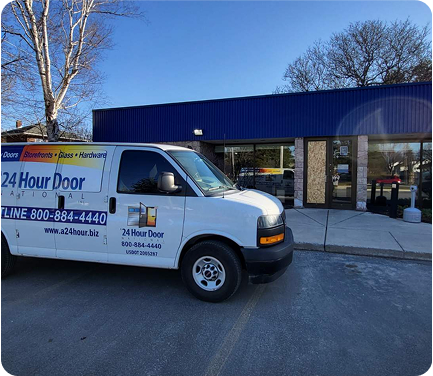
Philadelphia properties do not have extra doors waiting in the wings. When a primary automatic entrance is down in 19103 Rittenhouse or 19106 Old City, the business takes a direct hit. Fast dispatch from Southwest Philadelphia, near 6835 Greenway Ave in 19142, keeps travel times short across University City, Center City, South Philadelphia, and up into Fishtown and Northern Liberties. For suburban runs to King of Prussia, Conshohocken, Bala Cynwyd, Blue Bell, Bensalem, and Cherry Hill, direct-dispatch technicians cut lag between diagnosis and repair.
Stock on the truck matters. A truck that carries common Record USA motors and belts, Stanley and Horton roller kits, BEA sensor modules, Optex activation sensors, and door arm assemblies makes same-day completion possible. It also cuts the two-trip cycle that general glaziers often follow. On top of operator parts, a good Philadelphia truck carries Adams Rite locks, Von Duprin exit device service parts for adjacent egress doors, EPDM weatherstripping, sweeps, thresholds, and aluminum header anchors to correct alignment and load issues on the spot.
What a service scope and timeline look like on a typical call
A credible automatic sliding door repair call starts with a site walk. The technician watches traffic patterns and tests activation and safety sensors with real people in view. They put the door into learn mode if applicable, check belts for tension and wear, inspect hanger rollers and tracks for debris, and test the motor current draw. If a belt is frayed or a roller is flat-spotted, replacement happens immediately if stock is on the truck. Sensor replacements and realignment come next, followed by recalibration to ANSI coverage. The visit ends with a full function test and written documentation.
For a swing door operator, the process starts with door balance and hardware. The technician disconnects the arm to feel the door swing by hand. If the door sticks, drags, or hits the threshold, the pivot or hinge stack gets attention. Once the leaf moves freely, the operator speeds and times get set. Sensors are aligned and tested, push plates examined, and holding force and closing speeds are measured against ANSI A156.19 or A156.10 as appropriate. The job closes with several cycles under normal traffic, adjustments locked in, and documentation handed over.
What the Philadelphia market typically pays and why an on-site estimate matters
Automatic door repair costs in the Philadelphia market range widely because scope ranges from a sensor recalibration to a motor and control swap. General-market scenarios can fall anywhere from a modest service charge plus labor for adjustments to a higher figure for complex parts replacement, multi-sensor packages, or after-hours emergency service. Buildings in 19102 and 19103 often schedule work during off-peak hours to avoid disrupting tenants, which can change the labor window. Hospitals and airports require compliance and access coordination. Exact pricing needs an on-site estimate because the same symptom can have multiple causes. A door that fails to open might need a simple sensor replacement, or it might need a control board and motor after a thermal event. A quick diagnostic visit prevents surprises.
https://s3.amazonaws.com/commercial-door-shop/philadelphia-commercial-glass-door-repair-2026-top-5.htmlA practical, shareable fact for Philadelphia property teams
Philadelphia’s commercial calendar favors two service windows for automatic doors. April and May catch belts, rollers, sensors, and settings before summer heat and humidity raise false trips and slow closings. September and October reset speed and sensor logic before winter’s freeze-thaw swings, which often number dozens of times in a season. Properties on Walnut Street, Chestnut Street, South Street, East Passyunk Avenue, and Frankford Avenue routinely see daily cycle counts in the hundreds to thousands, which is why these spring and fall visits yield fewer mid-season failures than a single annual check performed off-cycle.
How automatic door repair ties into broader commercial door service
Automatic doors live next to manual storefront doors, panic-equipped egress doors, and sometimes dock or service doors. A site that runs a sliding entrance at the front often depends on a panic-equipped hollow metal or aluminum side door for emergency egress. That means exit devices like Von Duprin 98/99 Series and electric strikes must function and align. A building that handles packages and carts also runs overhead sectional or rolling steel service doors at the rear. A team that understands all of these openings reduces vendor overlap and improves response when failure in one area pressures another. For example, when an automatic entrance is offline during a nor’easter, a reliable egress door with a correctly adjusted LCN 4040 closer and an Adams Rite latch prevents a full shutdown.
What to expect from a complete AAADM service program
- Annual AAADM inspection with documented tests per ANSI A156.10 or A156.19, including speed, force, and sensor coverage checks.
- Quarterly or semi-annual tune-ups for high-cycle locations, with focus on belts, rollers, arms, clutches, and sensor recalibration.
- Door and frame alignment checks on adjacent storefront components to remove excess operator load before it becomes a failure.
- Stocked-parts strategy for site-critical brands like Record USA, Stanley, Besam ASSA ABLOY, and Horton to speed same-day completion.
- Integration review for access control, push plates, and electric strikes so activation and security work together without nuisance faults.
Local coverage and examples that fit the map
In 19103 and 19102, high-rise lobbies with sliding doors need quiet gearboxes and calibrated presence sensors because sound carries. In 19104 University City and the medical district, doors must pass continuous safety checks because patient and staff traffic mix at speed. In 19106 Old City and 19107 Washington Square West, space is tight and sensor zoning must ignore cross-traffic that hugs the glass. In 19148 South Philadelphia and 19147 Bella Vista, busy restaurant hours cause surges that expose weak belts and rollers. Northern Liberties 19123 and Fishtown 19125 place doors right on the sidewalk, where grit and wind push sensor packages hard. The Navy Yard 19112 faces wind bursts that magnify stack effect and test swing operator backcheck and closing force daily. Each site profile shapes parts selection, settings, and service intervals.
Why Philadelphia businesses call A-24 Hour Door National Inc. For AAADM-certified automatic door repair
A-24 Hour Door National Inc. Operates as a Philadelphia-based commercial door contractor at 6835 Greenway Ave, Philadelphia, PA 19142. The company dispatches locally 24 hours a day across Center City, University City, Old City, Northern Liberties, Fishtown, Fairmount, South Philadelphia, the Navy Yard, the Northeast, and the surrounding counties and suburbs including King of Prussia, Conshohocken, Bala Cynwyd, Norristown, Bensalem, Langhorne, Media, West Chester, Cherry Hill, Camden, and Wilmington. AAADM-certified technicians service automatic sliding, swinging, and telescoping doors and perform AAADM inspections aligned to ANSI A156.10 and A156.19. The Philadelphia team carries Record USA, Stanley, Besam ASSA ABLOY, and Horton Automatics familiarity, with BEA and Optex sensors on hand for same-day fixes. For storefront context, technicians are factory familiar with Kawneer, Vistawall, Tubelite, YKK AP, and US Aluminum systems, which keeps door alignment honest and operator loads low.
Service trucks are stocked for single-trip repair with motors, belts, hanger rollers, arms, clutch kits, control boards, BEA and Optex sensors, Adams Rite locks, Von Duprin exit device parts, EPDM weatherstripping, thresholds, and board-up materials for glass incidents. OEM replacement parts are used where available and backed by a satisfaction guarantee. The firm brings more than 30 years in the commercial door service market and holds Pennsylvania contractor license #PA078819. The model is direct-dispatch with local technicians who know how Philadelphia weather, traffic patterns, and building stock change what an automatic door needs to run right.
To schedule AAADM-certified automatic door repair, an AAADM inspection, or emergency commercial door repair in Philadelphia and the Delaware Valley, call A-24 Hour Door National Inc. At (215) 654-9550 or the national line at (800) 884-4440. 24/7 emergency dispatch is always staffed. Service requests can also be placed through https://a24hour.biz/philadelphia/. Coverage includes all Philadelphia zip codes listed above and the broader tri-county and tri-state area. Automatic sliding door repair, commercial door installation for new operators, and storefront hardware alignment are available by appointment or on emergency dispatch. AAADM-certified technicians, stocked service trucks, OEM parts, satisfaction guarantee, and a Philadelphia-first response model keep doors moving when it counts.